
Stacey Jaehnig
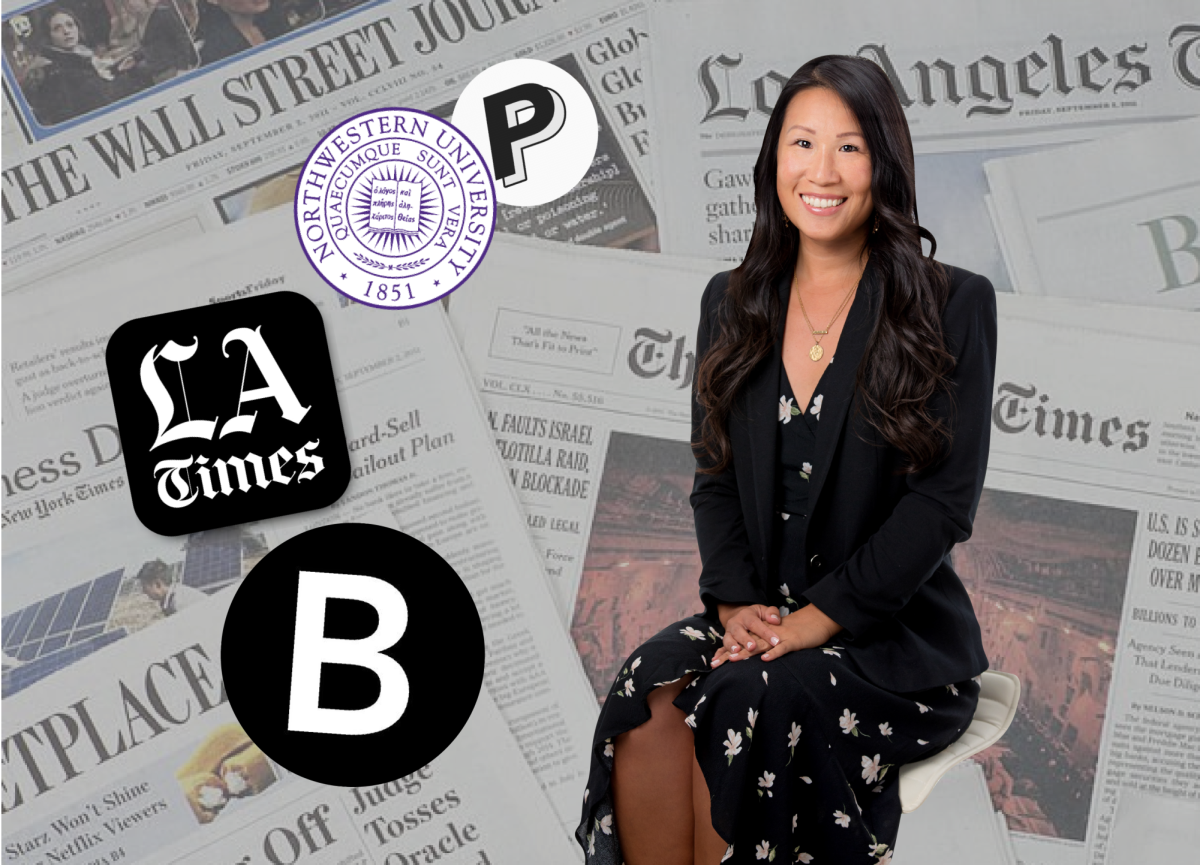
Step into her classroom for the math — stay for her contagious, pop-loving energy. In Room 405, where album and fan-favorite posters adorn the walls, math teacher Stacey Jaehnig is beloved not only for the time and attention she dedicates to supporting her students, but for a part of herself she brings from beyond the classroom.
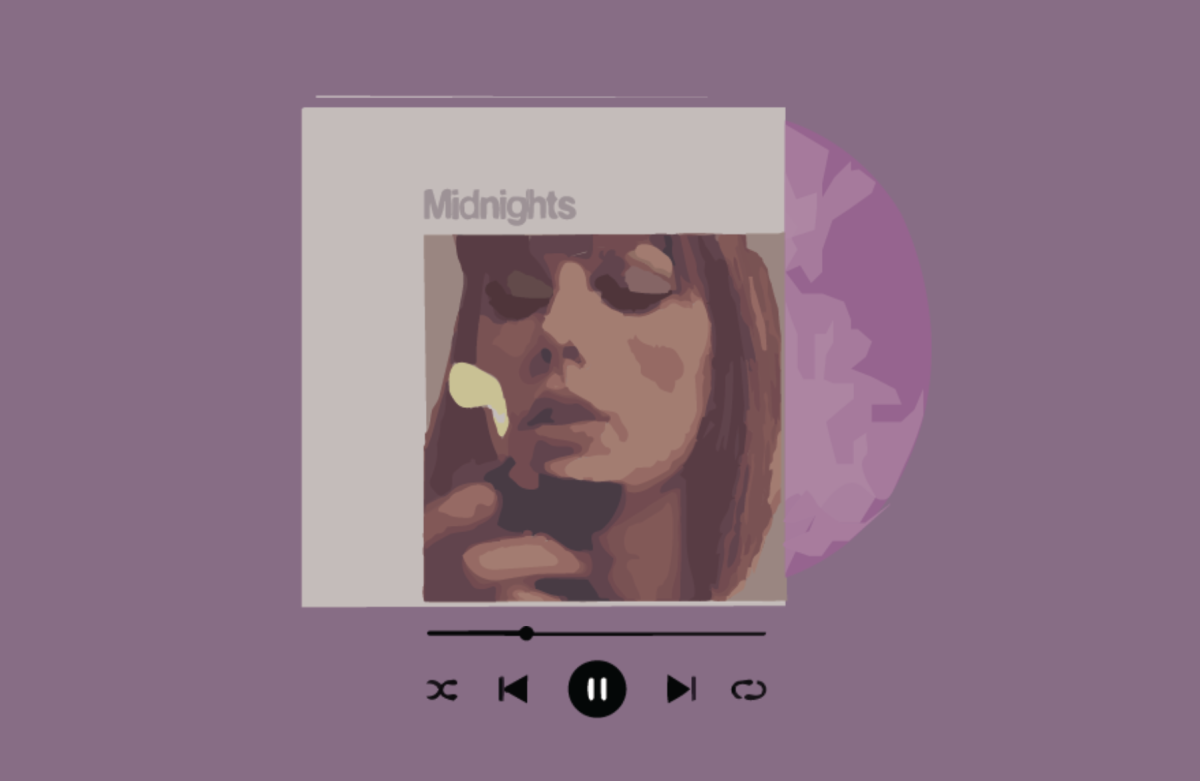
If you ask any of Jaehnig’s students, the numbers “13,” “22” and “1989” are special, and often answers to look for on math problems. Rooted in Taylor Swift’s career and iconography, these references appear as themes on her tests — a testament to one of Jaehnig’s defining influences in pop music. Jaehnig first became a fan in 2015, when she attended Swift’s “1989” concert alongside her daughters. Ever since, the three have traveled across cities and countries — from Las Vegas to London and Scotland — attending concerts for albums like “Red” and “Reputation,” including a notable six shows on the Eras Tour.
Swift is just one facet of a music taste Jaehnig describes as “mostly pop.” As songs became a source of connection between her and her daughters, they began exploring new artists and voices in the genre, often live in person.
“My younger daughter and I went to see Olivia Rodrigo in Palm Springs for her opening night of the ‘Guts Tour,’ with Chappell Roan opening, and I was amazed by what a great performer she was. Since then we have seen Gracie Abrams in New York, with Role Model opening, Noah Kahan in London with Gracie Abrams, and Ed Sheeran with Myles Smith in Germany,” Jaehnig said. “I had so much fun seeing artists in different places that it kind of became our family’s way of traveling.”
During the COVID-19 pandemic, Jaehnig found a unique opportunity to bring this growing love of pop music into her classroom, channeling it through the digital spaces her students were using. Beginning with Bitmoji classroom pages on Schoology — and scavenger hunts and wall decorations post-COVID — she wove in references to her favorite artists and songs, encouraging more students to explore the genre.
“My classroom really didn’t start looking like a pop music shrine until the ‘Reputation’ tour. I got my first concert poster for the classroom,” Jaehnig said. “The following year I realized that many of my students also loved Taylor so it just became a natural way to share experiences with them.”
What began as sharing pieces of her life has gradually become a more reciprocal language — one that has redefined her teaching experience and dynamic.
“[Pop music] just became a talking point. A few of my students would come to office hours online just to talk about ‘Folklore’ and ‘Evermore.’ Currently some of my students have been talking about Olivia’s new album with excitement so I am sure that’s going to be fun when it finally comes out,” Jaehnig said. “In the end, I hope students see teachers as more than just their subject, and if music gives students a way to connect to me or to others in the class, I’m all for it.”
David Chen
While rumors of his debut as a K-pop idol remain only rumors, chemistry teacher David Chen’s devotion to K-pop music is extremely real. Ever since a chance introduction over four years ago, Chen found himself increasingly drawn to K-pop — a devotion that is unmistakable to anyone who has stepped into his classroom.
“I went on a date with a guy in 2022 and he introduced me to his favorite group, which was TWICE. I was like, ‘Oh, this is really good,’” Chen said. “Now, I hear about songs from friends, or just what’s big. But there are also certain artists I keep a close eye on. Whenever they release something new, I always pay attention.”
Over the years, Chen’s growing interest in K-pop has broadened his music taste, though not without reflection. While Chen now describes himself as someone deeply familiar with K-pop, he also recognizes how this emphasis has reshaped the way he engages with music overall.
“I do wonder sometimes whether my previous music tastes have been kind of left behind, or I haven’t been exploring western music as much — because I also used to,” Chen said. “I still always listen to a lot of music, but now what I listen to is much more diverse.”
Even so, Chen views a handful of songs as familiar favorites.
“There are a few songs that rotate through my playlist, and then I’ll remember, ‘Oh, I need to listen to this again,’” Chen said. “For some reason, the first one that comes to mind is ‘Hard Place’ by H.E.R. Somehow, that has always made it back.”
Chen, who teaches chemistry, brings that energy into a subject often defined by precision and focus — using music not as a distraction, but as a way to lighten and even enhance the learning environment. Aside from his remarkable array of posters and CDs, music, for Chen and his students, shows up in small moments.
“There’s always like, ‘Oh, you listen to this niche artist?’ or ‘Do you like this?’ and I’ll be like, ‘Yeah, I know about them,’” Chen said.
Other times, music and teaching come together more directly. Each year, as his class approaches its final unit, Chen introduces what his students know as the “voltaic cell song” — a tradition he noticed transforms their complex material into something more memorable, even singable.
“A lot of the students I’ve taught have told me that this song was so instrumental to helping them remember some of our concepts. I don’t allow them to talk during tests, but I started seeing people kind of humming it in their heads. And I try to make that really fun, because I always sing along with the music video. I’ve done an opera variation of [the song], bass, soprano,” Chen said. “I fully believe that songs are a great way for learning material, because there’s memory involved. But I also think it’s a nice break apart from all we’re currently enraptured academia-wise, especially because we get so into the nitty-gritty at our school.”
Throughout his journey exploring K-pop as a teacher, Chen has not only shaped the minds of his students, but has also touched their hearts and ears — two phenomena that are rarely separate in his classroom.
Imene Aggoun
Ten steps short of Room 6111, you can already hear it: her morning playlist, spilling into the hallway and drawing in curious passersby. This classroom belongs to none other than French teacher Imene Aggoun, better known as “Madame” to her students, whose presence and perspective bring much more than just French culture to Cupertino High School.
For Aggoun, music is deeply connected to identity, memory and daily routine, shaping the way she connects with the world. Growing up as the youngest of three, she describes her earliest exposure to music as coming from her brother and mother’s wide-ranging preferences, which influenced Aggoun’s taste in a way that resists easy categorization. Despite her Algerian heritage and career as a French teacher, Aggoun finds it difficult to align herself with just one genre or language.
“[Among] my family members, everyone had a different taste. So I developed this, I would say, ‘rich directory of music,’” Aggoun said. “I listen to all music from around the world. I’m not just listening to French music or English music or Arabic music.”
Over time, that variety has become central to how Aggoun understands music itself — not just as entertainment, but as something tied to memory and emotion. Certain songs, she notes, have the power to bring her back to different points in life.
“Music takes me to Algeria, to my childhood, to France, to my teenagehood, to my adulthood,” Aggoun said. “Like today, I felt nostalgic to listen to Michael Jackson.”
Aggoun traces a significant part of her love for music to the comfort it has consistently provided.
Said Aggoun, “When I was a student, the stress of the exam always [brought me] headaches. Maybe some people would take medication — I would just put on my headset and listen to music. And that really calmed me down.”
Now, as a teacher, her positive experience with music is something she hopes to share with students. For Aggoun, music is not separate from learning — it is a tool, particularly in language acquisition. Though time constraints and curriculum demands limit how much she can formally incorporate it, music remains a constant in her classroom.
“I used to make my students listen more to music. Years ago, every class started with a song,” Aggoun said. “March is also a very long month. The kids are tired. Teachers are also tired. Having ‘Manie Musicale’ is a good way to bring some fun to the classroom now, and I cannot miss it.”
“Manie Musicale” is a March Madness–style competition and annual tradition in the French classroom. Modeled after the NCAA tournament, the activity features a lineup of Francophone songs that compete in daily matchups, with students listening and voting for their favorites to determine a final winner. Aggoun uses the tournament as a way to immerse her students in contemporary French culture — often also incorporating presentations on the competing artists, their backgrounds and the styles of music they create.
By sustaining these activities throughout her years in education, Aggoun has found music to be a bridge between her and her students. In some cases, that exchange even reverses roles, with students introducing Aggoun to new songs.
“At some point, my class of 2022 knew more French songs than me!” Aggoun said. “They always [asked], ‘Madame, did you hear this song?’ I’d say, ‘No!’ and I learned from them a lot.”
Moments like these, Aggoun explains, reflect a greater personal goal: not just teaching vocabulary or grammar, but also providing a broad cultural experience.
“Seeing my students get embedded in this new culture makes me feel so proud,” Aggoun said. “Probably some of them will never take French or use French, but learning about this different culture — I think it’s a priceless gift.”
For Aggoun, music serves many purposes in life. It has brought her comfort, connected her with others and helped her inspire and be inspired — often all at once.
“Music is not only a joy to our ears. It has more — it’s broader,” Aggoun said.
And when asked to pick one kind of music to listen to forever, Aggoun is quick to resist.
“I am music of the world,” Aggoun said. “I cannot [choose]. It depends on the moment.”