

Note: This interview was conducted in Japanese, and all quotes were translated into English by the author.
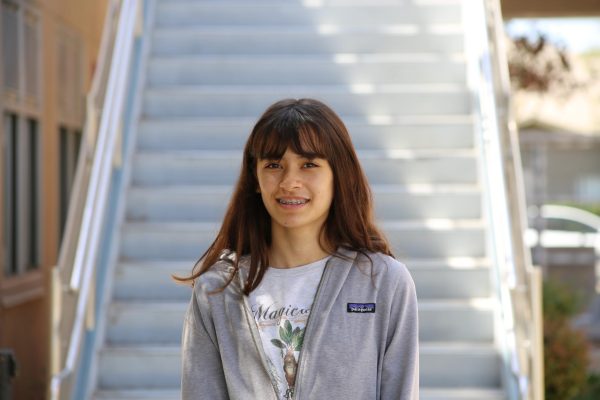
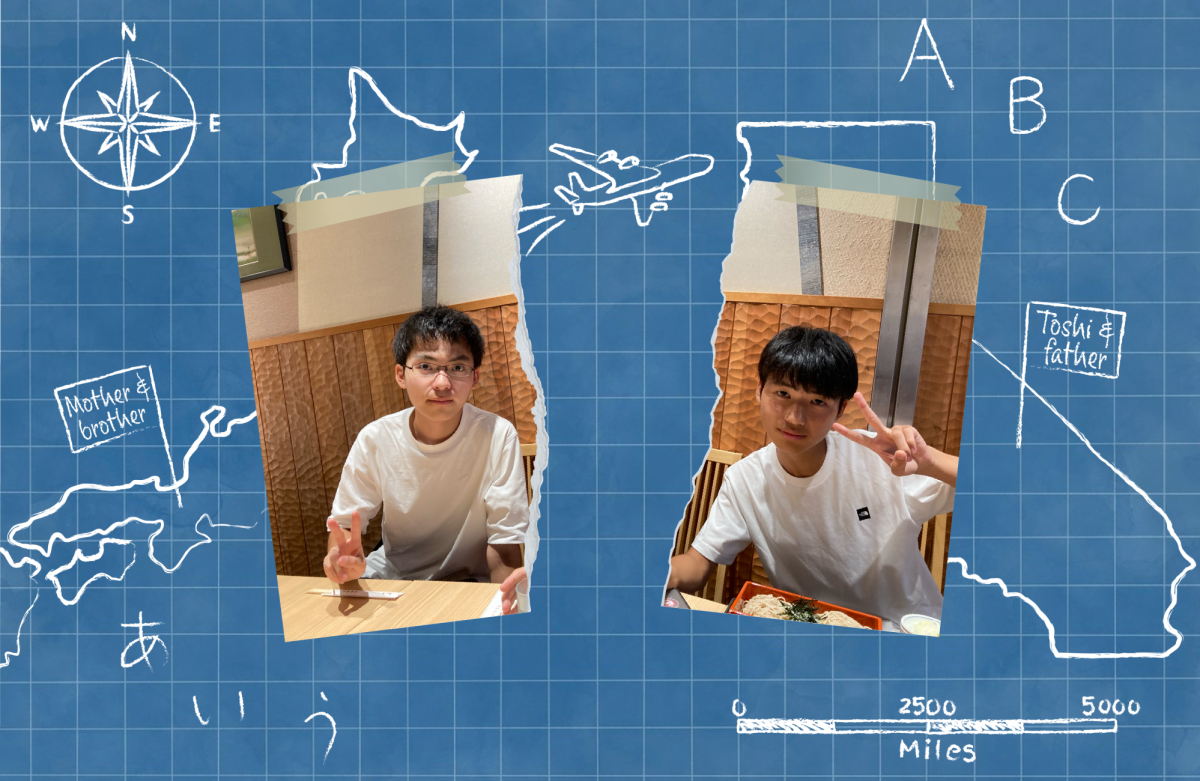
Freshman Toshitaka Tsubouchi is only a quick drive away from his father — yet over 5,000 miles of ocean separate him from his mother and older brother. Until last August, Tsubouchi’s family lived together in Yokohama, Japan. However, when his father had to relocate to the U.S. for work, Tsubouchi made an unusual choice — he chose to come along, splitting his family across continents.
Living across the globe from half his family was not a significant mental challenge for Tsubouchi. Although he and his brother were close at a young age, they gradually began talking less as they approached their middle school entrance exams. As for his mother, Tsubouchi found the separation tough at first, but he was able to move on within a few weeks.
Despite having to leave his mother and brother — who wanted to stay and focus on getting into a prestigious Japanese university — behind in Japan, Tsubouchi was motivated by the new experiences and opportunities that moving to the U.S. would offer. He also felt he was finally mature enough for the change.
“When you become an adult, you separate from your parents, eventually,” Tsubouchi said in Japanese. “You live alone. I thought that [time] was now, somehow. I felt like I had grown up one step after the middle school entrance exams, and after that, I felt like I had changed without realizing it. I don’t really feel it myself, but I’m with my father often, so he tells me things like, ‘You’ve become an adult.’’’
View in Japanese
Once he began living with his father in the U.S., Tsubouchi found himself having to take on new adult responsibilities.
“My dad and I have been dividing up the chores,” Tsubouchi said. “My dad usually washes the dishes and cleans the kitchen, and I usually cook and clean the toilets, bathtub and sinks — we’ve both been doing the laundry whenever one of us realizes it has to be done. My dad has also been saying that it’s such a hassle. It made me realize how amazing it was that my mom was doing three people’s worth [of housework].”
View in Japanese
Tsubouchi’s grandparents have been visiting from Japan every few months, during which they help with the chores. Because of their contributions, Tsubouchi was finally able to focus on his English and join clubs, which made him realize how much housework had been hindering his academics. Nonetheless, Tsubouchi views his situation through an empowering lens.
“I thought, ‘If I can learn how to speak English in these conditions, I’d be really strong,’” Tsubouchi said. “Learning how to speak English with just [my father], with chores on top of it, would mean I’d be learning English under harder circumstances, so I could tell myself, ‘Wow, that’s impressive!’ I guess that’s what I think as I go about it.”
View in Japanese
Over winter break, Tsubouchi was finally able to return to Japan and see his mother and brother for the first time in months. His family went on vacation to the Kanagawa prefecture, just south of Tokyo, and spent the New Year together. Although the moment of reunion itself was casual, Tsubouchi recalls clearly feeling the effects of the time they had spent apart.
“It was awkward,” Tsubouchi said. “I’m a very shy person, so even when there’s a short time apart — even if I had been interacting with my friends like usual — I feel distant from them. So I think I experienced a bit of that with my family, too. […] I think it might’ve been my first time experiencing it with my mom.”
View in Japanese
During their short reunion, Tsubouchi eventually found himself talking to his brother as if nothing had changed, checking in on the progress of his tutoring and college entrance exams.
“I think we’ve grown closer,” Tsubouchi said. “I always felt distant from my brother, but things have calmed down now, and we’re emailing. I think it’s become easier to talk to him than before.”
View in Japanese
On the other hand, the time that Tsubouchi spent apart from his mother changed the dynamic of their conversations.
“I was talking to my mom from a different perspective than before,” Tsubouchi said. “While I was in Japan, we’d talk about Japanese middle school and other trivial things, but once I came here, [we started talking about] the differences between the U.S. and Japan, […] and she’s been giving me advice about how I should do the chores. It’s a little weird for me to be saying it myself, but I think I’ve become a bit more of an adult.”
View in Japanese
Though Tsubouchi gained a sense of independence living with his father in the U.S., he emphasized his newfound appreciation for his mother’s efforts back when his whole family had lived in Japan. Ultimately, the 5,000 miles of physical distance separating Tsubouchi from his mother and brother brought them closer together.