
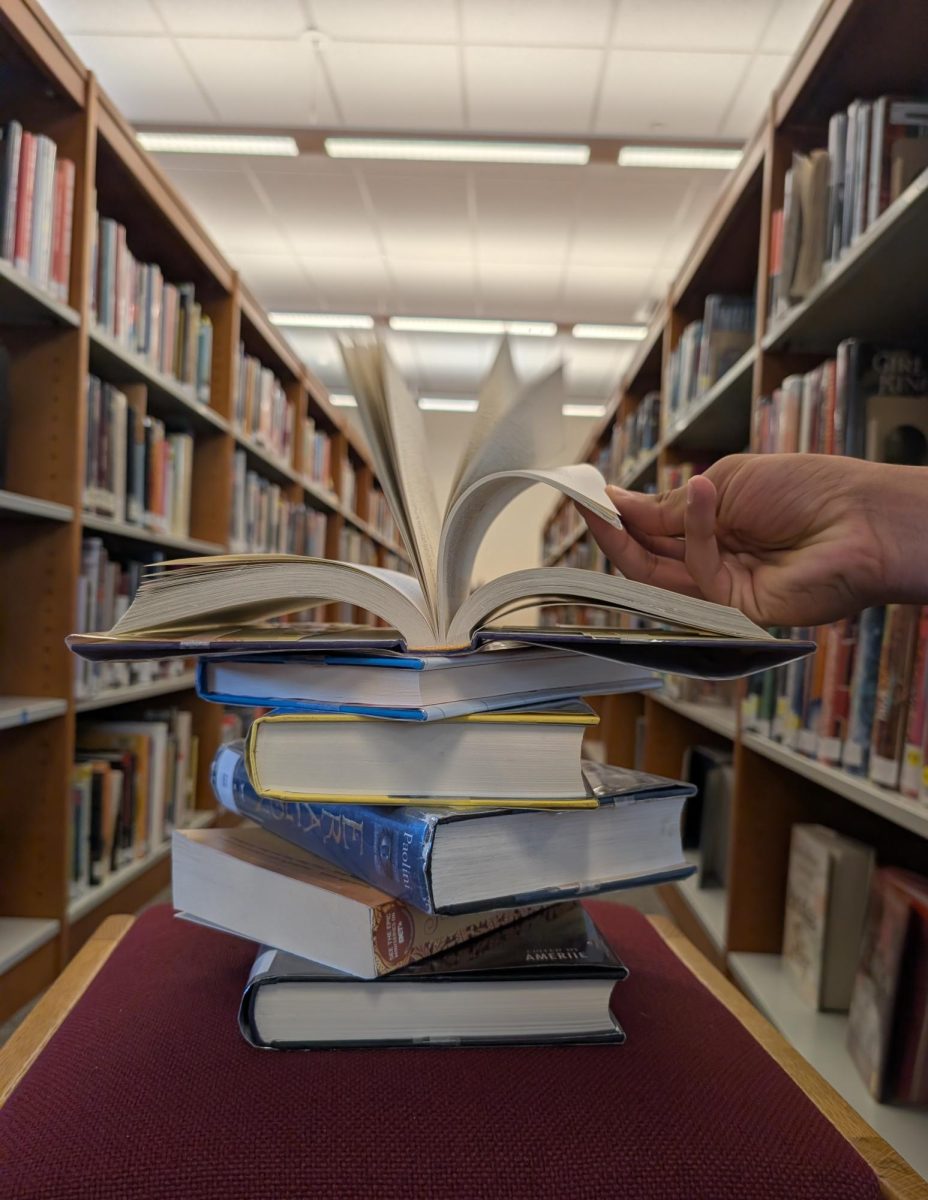
Don’t judge a book by its cover — judge it by the hashtags that have swept over Barnes & Noble aisles like a fever, peeling away genre labels to hoist neon signs pointing to your next “For You page” gem. Judge it by how neatly you can fit its deckled pages into a trope without breaking the spine, or by the enemies it constricts in between the lines. Regardless of the rise in somewhat tacky labels stamped across book covers, people are blowing off the layers of dust that have collected on their shelves, having found the oasis in the literary drought that spanned the last few years. But has TikTok truly become the literary crisis messiah, or has a more uninspired reason breathed life into the gasping corpse of printed works?
According to Accio, BookTok has driven over 9% growth in the American print book market, and the hashtag itself has accumulated over 90 billion views on TikTok alone. For a generation that grew up with Kindles and long-form video essays, a 15-second video sending someone to a bookstore feels close to a miracle — albeit a rehearsed one, reducing the novel’s worth to its promotability. Walk through the BookTok section of any store and among their shelves, a pattern emerges, as the spines blur into jewel tones and elaborate fantasy armor. Instead of description, the blurb is filled with promises. According to Swimpress, this “tropification” of literature is when the label becomes the sale.
The mechanics are not mysterious. The publishing industry has always followed trends, but it becomes a problem when pressure mounts on authors to write and release content at detrimental speeds. On the flip side, when readers consume books in quick succession without taking time to properly engage with the material, book review platforms like Fable and StoryGraph exacerbate this by introducing streaks and annual goals. Reading itself, becomes an Olympic sport.
But the comments in turn of “people are reading wrong” serves to be its own intellectual laziness, only contributing to the misconception that popular books on social media are always poorly written. Defining the quality of a book is ultimately as arbitrary as it is subjective. The literary establishment’s traditional gatekeepers have historically favored a narrow vision of what literature should be. BookTok has actively challenged this elitist view and encouraged young readers to engage with books at their own pace.
It remains to be seen whether BookTok is good or bad for reading. The way books are consumed is closing the door on the kind of reading that actually changes readers. The differences live somewhere in the slowness, in long paragraphs and third-person narration and dynamic ideas, precisely what BookTok lacks in its whirlwind of words and trending audios. Regardless, the dust on the shelf is gone. What we place on it remains the question.