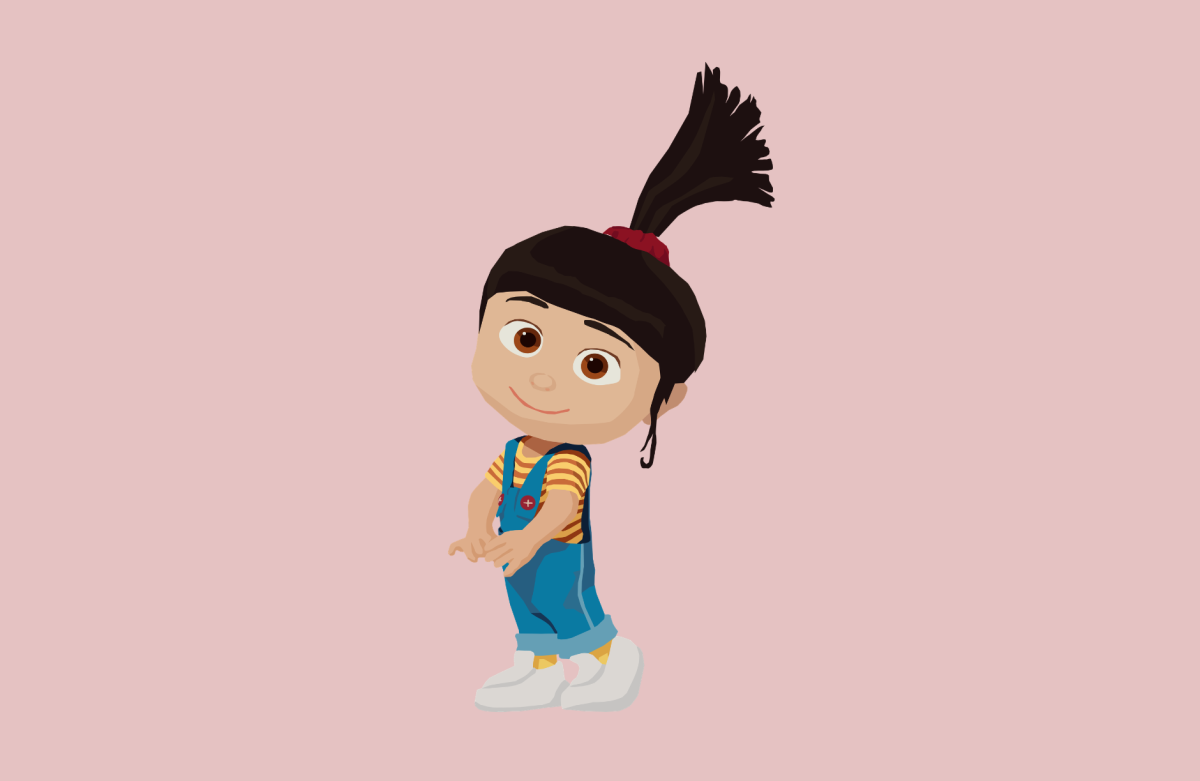

The female heroine — beautiful, domestic, feminine and utterly passive — is a cornerstone of girlhood for millions of Disney lovers across the world. To the dismay of fans revisiting the films, the portrayal of the naive damsel in distress reflects the patriarchal ideals upheld at the very studio that produced every young girl’s childhood dreams.
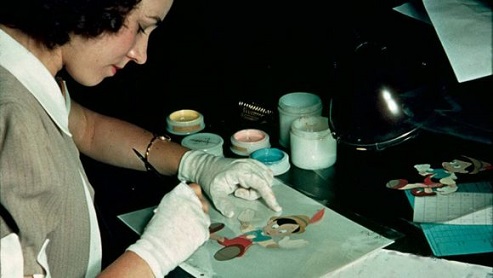
Film production for Disney’s beloved classics began in 1923, when the Walt Disney Company was founded by Walt and Roy Disney. Their first feature film, “Snow White and the Seven Dwarfs” was released in 1937 as the first ever full-length animated movie in color. The studio used celluloid, or “cel” animation to create their works, a laborious process that involved transferring traditional hand-drawn storyboards onto transparent plastic sheets. Since its conception, animation was immediately a male-dominant art form, and many productions — including Disney — believed that women were not fit to actively animate.
Walt Disney continued to be a pioneer in the animation industry through his invention and implementation of the multiplane camera, which allowed him to photograph through several layers of drawings, creating an illusion of depth. His work stood out among others through his use of revolutionary animation techniques such as rotoscoping, where animators traced over recorded footage frame-by-frame for a more realistic feel. Within a decade, Disney became a birthplace of ground-breaking animation technology, attracting talented craftsmen and artists nationwide. A man blessed with both artistry and creativity was handed a spot in the main Animation Department — a woman holding the same merit was only offered a job in Ink and Paint.
Beginning in the 1920s, 100 women worked in the Ink and Paint Department of the studio. Back then, it was difficult for them to earn positions as actual animators — most women were assigned to tedious, labor-intensive roles. This usually involved tracing predetermined designs onto transparent cels, where multiple layers and backgrounds worked together to create only a single frame. This was an integral part of the medium and a laborious process, yet these women had no creative input on the final product and their voices were dismissed.
Women were, for lack of a better word, cheap. While men were paid up to $300 a week, their female counterparts were only paid $18 a week despite working 80-hour weeks. According to a 2021 Medium article, aspiring women artists trained for rigorous and unpaid hours for five months, where a roster of 60 would only yield three employees. The source proceeds to reveal that Walt only favored young, good-looking women who could be used as “live models” when needed.
Walt Disney was clear that he was not interested in hiring any women in the creative departments of his studio, reinforcing the strict gender roles displayed on screen. In the late 1930s — when Walt Disney’s work began receiving more media exposure — many aspiring women sought out interviews with the producer, hoping to land a job at the renowned studio. However, it seemed Disney’s reliance on traditional gender roles had translated to the treatment of their women employees. They were usually turned down — and on the off chance they were hired, they were scrutinized by male coworkers and studio executives.
A 1938 rejection letter by Walt Disney Studios revealed the fate of most female applicants. The letter made the studio’s stance on women’s employment clear, stating, “[…] women do not do any of the creative work in connection with preparing the cartoons for the screen, as that work is performed entirely by young men. For this reason, girls are not considered for the training school.”
During World War II, Walt Disney began training a select group of women as inbetweeners to replace the men enlisting for war. The “tweeners” were responsible for creating intermediate drawings between the storyboard frames, but they had limited control over the key character poses. This left them with some room for creative expression — however, it remained a marginal upgrade from the Ink and Painting Department.
This margin grew as Disney entered its Golden Age of animation. In a 1941 speech, Walt expressed to his staff that employing women could potentially provide different points of view that the men could not bring to the table. Though his change in attitude regarding the employment of women was likely driven by the sudden labor shortage, it was a drastic improvement from the former hiring procedure.
With more than 170 Disney staffers off to war, the women left behind were finally allowed to toil on assignments beyond traditional inking. Under the war agenda, the studio was contracted for educational and propaganda films. The same contracts, issued by the United States federal government, prompted the creation of the iconic “Rosie the Riveter,” representing American women who took on manufacturing jobs previously held by men. Employed women, including those working under Walt Disney Studios, were encouraged to join the workforce and take on jobs that were exclusive to men prior to the war.
The first woman promoted to the studio’s story department was artist and fashion designer, Bianca Majolie. At the time, Majolie attended the Chicago Academy of Fine Arts and designed brochures for a living. Walt was impressed with her portfolio and offered Majolie a position in the story department. This was huge for a studio that previously claimed that women were incapable of performing creative work.
As the first and only female employee at the time, Majolie experienced mistreatment during her time on the writing team. In Nathalia Holt’s novel, “The Queens of Animation,” Majolie recalls skipping as many meetings as possible, as they were often humiliating and involved constant ridicule from her male coworkers. Majolie shaped many of Disney’s early classics — translating the original “Pinocchio” tale to English so that the studio could adapt it — yet official film records hardly credit her on any of them. Despite her contributions to the studio’s juggernaut films, the artist felt unwanted in the workplace and was later replaced by the studio.
Two years later, Walt Disney hired Grace Huntington — an accomplished aviator who was excluded from the military due to her gender. Huntington endured similar prejudice as Majolie. Upon her first story meeting, she was met outside the door to the meeting room by a security guard, who stopped her from entering because she was a woman. When she eventually made her way in, her colleagues whistled and glared at her. In Holt’s novel, Huntington expressed she felt as though she was in need of armor to protect herself from the actions of her male coworkers. Despite fighting the limitations of her gender, Huntington worked on many of the “Mickey and Minnie Mouse” cartoons, and also advocated for Disney to hire more female writers.
Mary Blair originally worked in Disney’s story department, but quit due to a combination of disinterest in working under Disney animators and desire to pursue personal projects. After developing her fine arts, Blair and her husband were invited to attend Disney’s “Goodwill Tour” in South America, where a hand-picked group of artists researched the local culture to gather materials for future films.
Following the trip, Blair became one of Walt Disney’s favorite artists for the unique concept art she developed for Disney classics. Her colorful illustrations and incorporation of modern art elements influenced Disney’s signature whimsical style. Disney was so impressed with her work that he offered her a role as an art supervisor for the animated films “Saludos Amigos” and “The Three Caballeros.” Blair was also the principal designer of Disneyland’s “A Small World” ride.
It was the work of Majolie, Huntington, Blair and hundreds more that combatted the patriarchal nature of the studio. As more women joined the strongholds of the story and animation departments, Disney’s stringent policies began slipping. The animation industry was not unique in how it excluded women throughout its history. Like almost any other industry, men had years to become acquainted with all positions in the field, and it took decades for those positions to extend to women alike. Regardless, the production’s refusal to hire women in creative roles perpetuated the gender division in the labor force, labelling women’s labor as secondary.
Today, women make up 50% of Disney’s overall workforce — a milestone made possible by these early pioneers. Majolie, Huntington and Blair were pivotal in the shift to a more equally gendered workforce. These women — along with hundreds of others who have been largely written out of the studio’s history — defied the expectation that women were incapable of working in the animation department. Turns out the women of Disney animation were never the helpless beings depicted in the films, but rather the front-runners of the studio’s everlasting legacy.