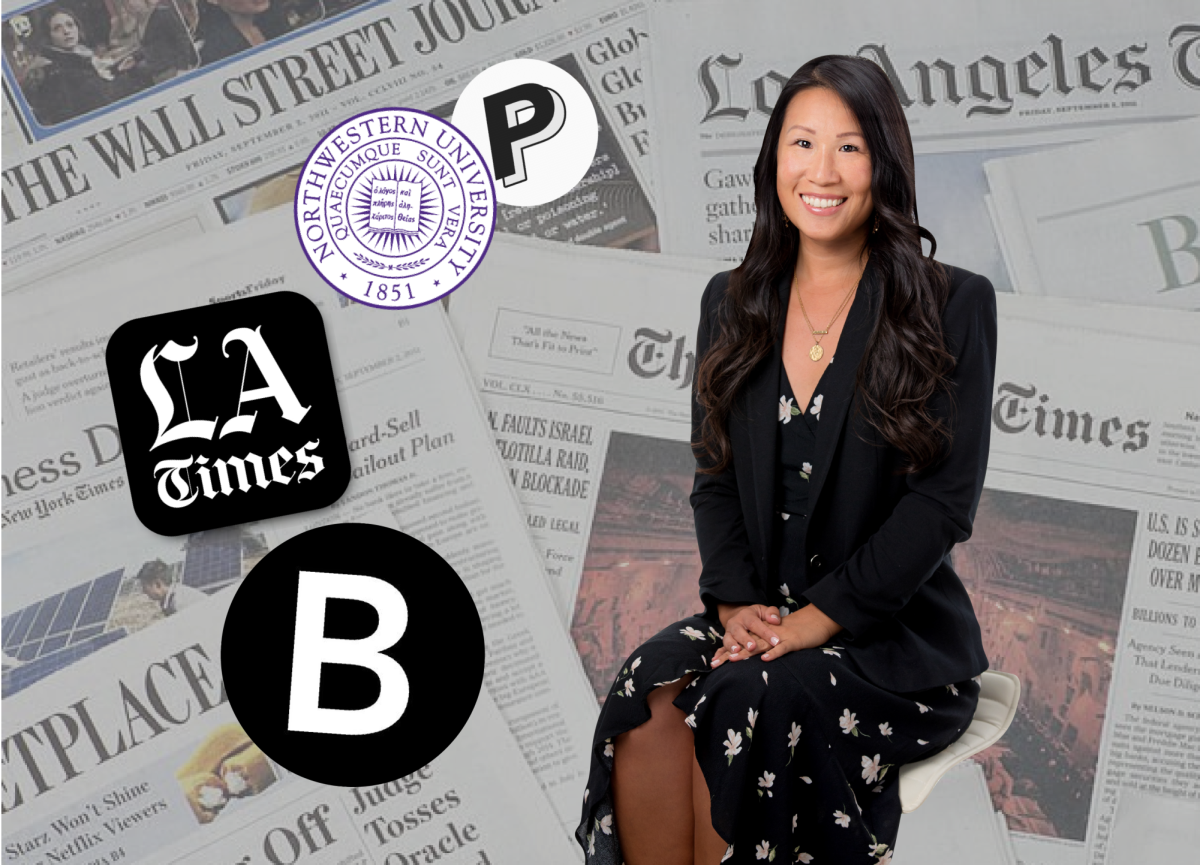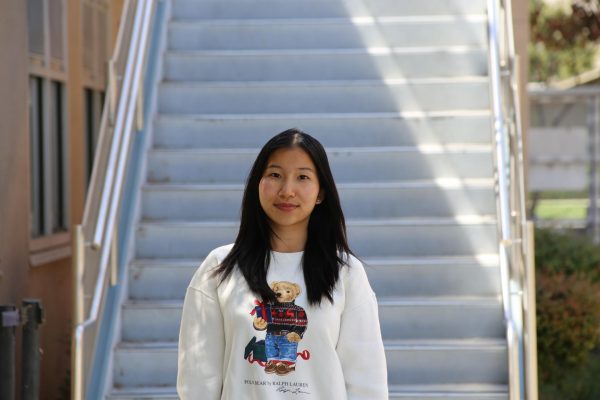


From navigating a new life in the States to becoming a nationally recognized world language instructor, Cupertino High School’s Chinese teacher, Ying Jin, continues to enlighten hundreds of students about the journey to success through her passion for teaching.
Jin’s teaching roots stretch back to early childhood, where she grew up in a multilingual community in China. She came from a long line of accomplished educators. Her grandfather was a Chinese teacher in Japan, and both of her parents taught Russian at Beijing Foreign Studies University.
From a young age, Jin’s parents believed she would make an adept language teacher due to her cordial personality and deep understanding of the Chinese language and culture. In college, Jin went down a similar path as her parents and majored in Chinese language and literature at Peking University.
After receiving her Bachelor of Arts, Jin briefly considered diverting from the teaching path to become a sports journalist. She recalled having a conversation with her father about her future job and how a career in journalism was something he opposed, since he knew it was not where her passion truly lay.
Ultimately, Jin decided to take her father’s advice. Freshly out of college, Jin began teaching at the same university her parents once taught at. There, she was introduced to a plethora of international students from other cultures and countries, and became friends with American coworkers. They told her about life in the States and the opportunities she could find there as an educator. When she wasn’t working, Jin indulged in American television and saw the allure of American culture. During this time, the idea of starting a new life outside of China began to form. Said Jin, “I always wanted to get a chance to really see the world, and I knew [America] gave people opportunities to try new things.”
A few years later, she decided to leave her job at BFSU and make the big move to America. As a young woman who had never traveled or lived independently before, it was one of the most daunting transitions of her life.
“I realized that I had to take care of everything, such as opening a bank account […] I didn’t have a car, so I learned how to ride the bus — all those little things,” said Jin. “But I really [enjoyed] that experience, because that was the first time I felt like I was very independent.”
Jin stayed in Portland, Oregon, for two years, attending Reed College and finding a supportive community that guided her in adapting to the new environment. She experienced some culture shock, particularly in regards to the tranquil nature of the city. Said Jin, “I think Portland was a really good place to start, [especially] for new immigrants […] people are very friendly and it was a very tight community.”
After finishing the graduate program, she moved to the Bay Area and attended San Francisco State University to earn her Master Degree of Arts in Educational Technologies.
Around this time, internet-based companies were rising rapidly in valuation — a period of time known as the dot-com bubble. After graduating from SFSU, Jin worked as the online marketing director of a formidable dot-com company. Said Jin, “It was hard for [employers] to find someone who spoke Chinese and was familiar with [technology], so I got hired and worked there for a couple of years and built a network.” She was also employed at an import-export company, where she made connections with a diverse community of industry professionals. Although Jin did not continue working in either field, she was thankful for the knowledge she gathered from both jobs.
“[…] when I think about it [now], I really think my experience working with the dot-com and trading companies gave me a lot of living experience, [and taught me] how to work with different people,” said Jin. “I think all of that has a great impact on my teaching now.”
After years of working in business and commerce, Jin’s passion for teaching sparked once more after an interaction with a friend who worked at the Oakland Chinatown Community Center.
“One day, he could not make it to his class, and he said, ‘I know […] you were a teacher. Can you substitute?’ […] I remember the moment I went back — the moment I went back to the podium — I was like, ‘Oh my God, I miss teaching. I need to go back to teach,’” Jin said.
From there, Jin got her teaching credentials from California State University, where she was assigned a supervisor who completely shifted her mindset as an educator.
“I still remember [on my] first day [my supervisor] told me, ‘I’m not worried about your content knowledge at all […] I’m going to do my best to change the way you teach,’” said Jin. “She said people tend to teach the way that they were taught, but she said I received education in China decades ago. These days, in the 21st century, kids need different styles of teaching […] so that was really my ‘aha’ moment.”
She took this advice to heart when she became a student teacher at Palo Alto High School years later. Her mentor at PAHS showed her the differences between American and Chinese teaching styles — she noticed that the Chinese education system was lecture-centered, while Western education is much more student-centered. She began to develop interactive activities that supported young students in their learning to create a more engaging experience.
As a student-teacher, Jin had to change her teaching philosophy to meet the needs of American students. Jin learned to adapt and work with students from varying levels of Chinese to develop a curriculum that would effectively support them in their learning. She became the chief editor of the Chinese one textbook, which is still used to this day.
Jin began getting involved in outside organizations, taking classes from nearby universities to enhance her teaching skills and listening to teachers’ experiences from across the country. She wanted to keep her knowledge updated on students’ educational needs. She currently serves as the executive director of the Chinese Language Association of Secondary-Elementary Schools, which gave her perspective on how world language teachers nationwide developed curricula using limited resources.
“One thing I’ve learned from [these] experiences is that I’m no longer just a Chinese teacher, I’m a world language teacher,” said Jin. “I represent all languages, so I should advocate for all languages, not just Chinese.” Collaborating with people who understood the inner workings of teaching a language was extremely helpful and rewarding for Jin.
Today, Jin is continuously amazed and inspired by her students and greatly appreciative of the Fremont Union High School District community. As a teacher, she is passionate about guiding students at any stage of their language-learning endeavors. Said Jin, “I like those moments, especially in Chinese one or Chinese two, when I share things about the language or culture and I see it in their eyes — it is actually clicking […] it’s very rewarding.”
After gathering decades of experience and enjoying many hard-earned successes, Jin plans to continue impacting the world language education field and dedicate herself to becoming an improved educator day by day.