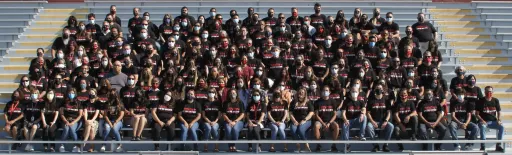


Every year, members of Cupertino High School’s Japan Bowl team travel to Washington, D.C., for a two-day competition — the culmination of months of research, memorization and commitment.
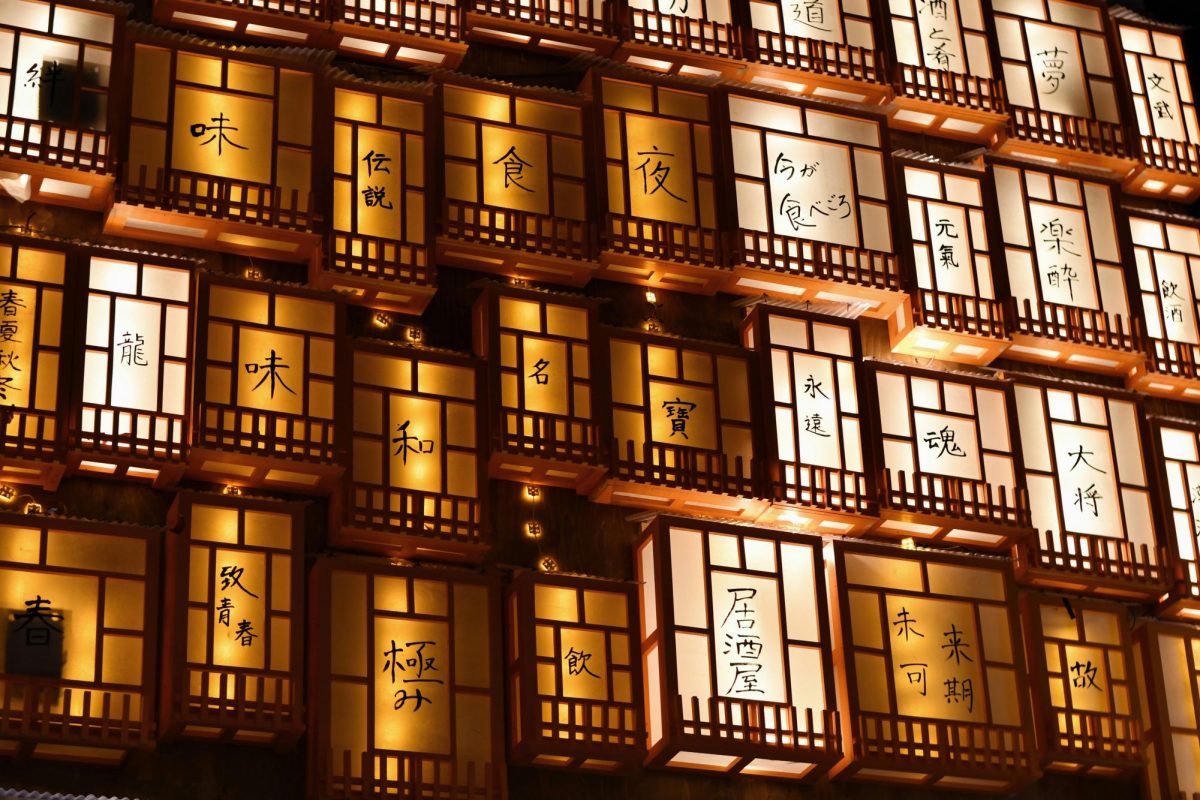
The National Japan Bowl, hosted annually by the Japan-America Society of Washington, D.C., tests participants’ understanding of Japanese language, culture and history. Teams compete in three preliminaries and a conversation round, with the top three teams from each proficiency level advancing to the championship round. Competitors demonstrate their ability to write kanji, use proverbs and idioms, interpret conversations and articulate ideas in Japanese — skills that require thoughtful communication and cultural awareness.
In the past few years, the CHS J-Bowl team has consistently placed among the top three for one or more levels. As one of three local schools to place nationally in 2024, the team was recognized by the Santa Clara County Board of Supervisors for its outstanding performance.
“I’m proud of how our team did. […] They’ve all been really dedicated to studying and everything, and I can tell that they’re very passionate about being a part of Japan Bowl,” senior and level four competitor Katelyn Lai said. “So in that sense, I’m very proud of how far they’ve come and how well they performed.”
This success is the product of nearly half a year of preparation. First, three students per Japanese level are selected to compete through a preliminary test, equaling nine members in total. By November, students meet twice a week to study, practice and learn from one another. Combined with individual studying, this amounts to around seven hours per week dedicated to J-Bowl, roughly equivalent to an additional class.
For sophomore and level two competitor Vedha Geethakrishnan, the experience has brought her closer to her teammates and allowed her to immerse herself in learning Japanese.
“Japan Bowl has taught me how to be more collaborative with other people, and we are all like a family,” Geethakrishan said. “We have a greater appreciation and love for the Japanese language that we get to learn.”
Since CHS is set to phase out its Japanese program over the next four years, the J-Bowl team’s future is undecided. Because language is a significant part of Japan Bowl, students may no longer be able to compete in certain levels after the corresponding Japanese classes are discontinued. This could ultimately force the team to dissolve.
Amid this uncertainty, CHS Japanese teacher Stefanie Fan continues to advocate J-Bowl as an invaluable experience.
“It’s just a really good high school memory,” Fan said. “There are students who are long gone and graduated, but that’s one of the things that they still remember about high school. They’ve made those friendships — they probably wouldn’t be friends if it weren’t for Japan Bowl.”
In addition to maintaining these friendships, senior and two-time competitor Prachi Marfatia hopes to continue applying and strengthening her knowledge of the Japanese language.
“I just want to keep engaging with the language and culture as much as I can,” Marfatia said. “Right now I translate for ELD […] and I’ve made a few friends from that, but I just want to keep speaking as much as I can.”
Above all, J-Bowl participants acquire a genuine love of learning and a passion for understanding Japanese culture.
“There’s a reason why I kept doing Japan Bowl for three years,” Lai said. “I really love learning the culture. I love learning the language. And it’s such a satisfying feeling to be able to understand something after working at it for so much time.”