
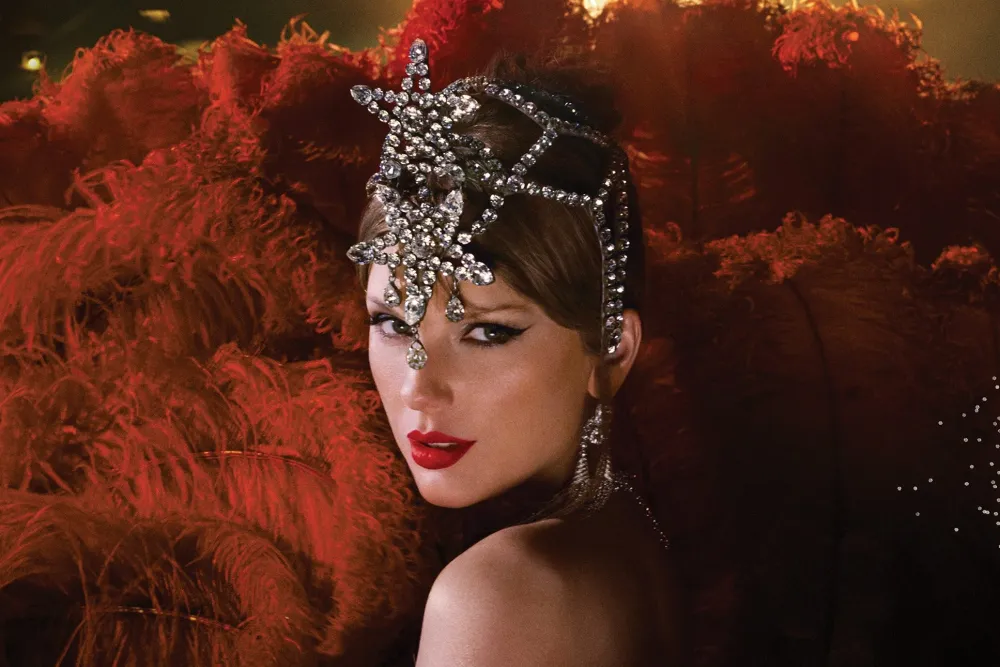
Taylor Swift released record-smashing album “The Life of a Showgirl” on Oct. 3, 2025, making it the artist’s twelfth original studio album in her 19 years of songwriting. Even before its release, “The Life of a Showgirl” broke the record held for the most pre-saved album on Spotify with more than six million saves. The album sold approximately $3.47 million in pure album copies within its first week, along with 1.33 million vinyl copies, marking the biggest sales week in the modern era. The Rolling Stone, along with other music magazines, praised her album for its “incisive storytelling,” scoring it a perfect 100 out of 100.
Despite its historic release, its immediate popularity might also be attributed to the internet’s rolling criticism. Public backlash infiltrated social media platforms, with listeners condemning the album’s explicit and unrelatable nature. Critic reviews described its songs as being on “autopilot” with “factory-grade tunes.” Most of all, there has been heavy speculation of plagiarism in Swift’s songs, like “Wood” and “Actually Romantic,” with audiences noticing similarities between older pop songs and melodies embedded in her newest release. “The Life of a Showgirl” calls for an investigation into what constitutes original and permissible music when extracting from pre-existing tracks.
Musical plagiarism is the unauthorized application of another artist’s copyrighted material through rhythm, melody or lyrics. Plagiarism is illegal copyright infringement and can result in serious criminal penalties. Interpolation, on the other hand, is not inherently bad, as it uses only a portion of a pre-existing song and re-records its audio to integrate it into new music. Interpolations require a license from the music’s copyright owner. However, unlike with samples, artists do not need permission from the copyright owner of the pre-existing sound recording because new material is re-recorded in an interpolation. Popular songs that involve interpolations include Ariana Grande’s “7 Rings,” which interpolates Rodgers and Hammerstein’s “My Favorite Things,” as well as Selena Gomez’s “Bad Liar,” which interpolates “Psycho Killer” from Talking Heads.
In fact, Swift herself interpolated Right Said Fred’s “I’m Too Sexy” for her 2017 hit “Look What You Made Me Do.” Swift approached Right Said Fred to ask for consent to use their track, and the band willingly agreed, publicly expressing how honored they felt by her request.
With “The Life of a Showgirl,” listeners have attempted to defame Swift, pointing out tunes and notes resembling existing songs. However, Joe Bennet, a forensic musicologist at the Berklee College of Music, suggests that what critics are hearing are “melodic coincidences” that occur more frequently than not. For example, Bennet debunks the internet accusation that the guitar riff from “Wood” mimics “I Want You Back” by the Jackson 5, explaining how its musical overtones are reflected in numerous other songs produced during the disco and funk era. Overlaps in popular music are not only inevitable; they are somewhat common in the growing music industry. Artists who unintentionally use similar chord progressions can still produce authentic songs by varying musical elements like instrumentals or lyrics.
Alternatively, in the case that Swift deliberately copied pre-existing music, like her critics claim, she could face a lawsuit. If a composer accuses her of copyright infringement, they must supply evidence that Swift had access to the existing material prior to producing her tracks. Musicologists familiar with music history and culture would contribute their individual expertise to the court decision. However, taking copyright violations to court is an infrequent occurrence. Rulings are largely subjective, and determining an artist’s intentions with older songs proves challenging with the modern surge in music production.
Swift’s newest album remains subject to controversy weeks after its release, but her potential interpolations should not be universally criminalized. Her material can be a product of inspiration and can lawfully use existing tracks without violating another artist’s authenticity or copyrighted material. Regardless of its outcome, “The Life of a Showgirl” controversy stands for our freedom as listeners, affirming our right to interpret music differently and feel entitled to our artistic opinions. Swift said it herself when she validated her critics on Apple 1’s “The Zane Lowe Show.” Said Swift, “Everybody is allowed to feel exactly how they want [about my music].”