
Amid rising social tension in the United States, media companies’ right to freedom of expression has come to the forefront of American politics.
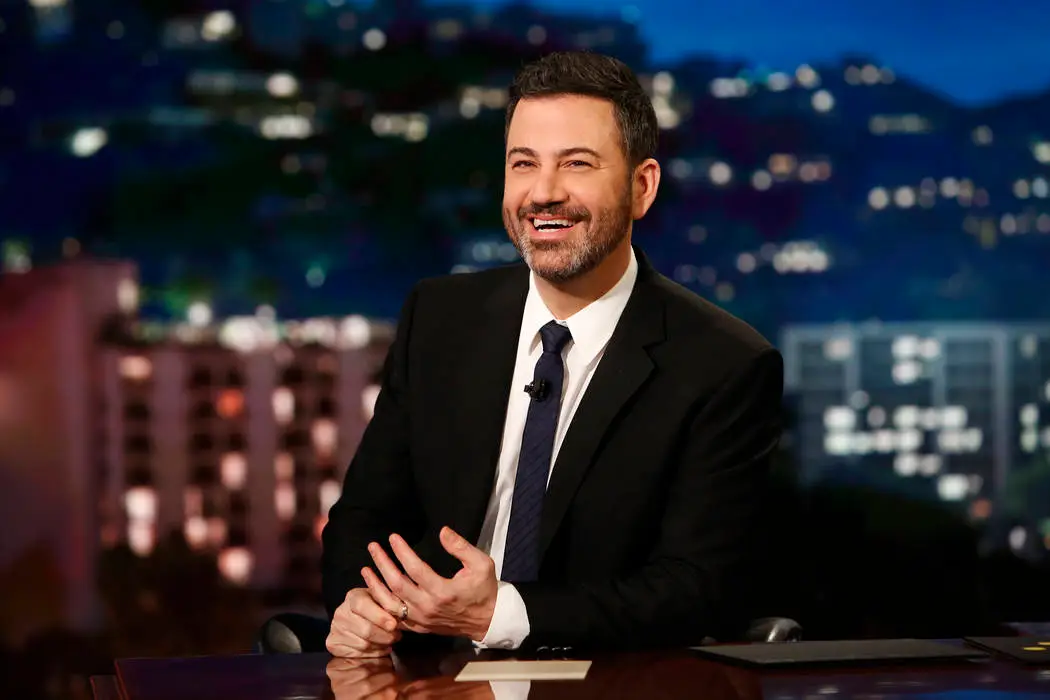
On Sept. 17, 2025, the American Broadcasting Company’s cancellation of the talk show “Jimmy Kimmel Live!” divided the nation. While many viewed it as an appropriate response to Kimmel’s remarks on the shooting of political activist Charlie Kirk, others worried it could lead to further restrictions on politically opinionated speech in broadcasting.
Following the shooting, Kimmel made several comments accusing members of the Republican Party of using Kirk’s death to their political advantage. Shortly after, ABC temporarily suspended Kimmel’s show — a decision it later explained was meant to “avoid further inflaming a tense situation at an emotional moment for our country.” Media company Nexstar also preempted the show, stating that Kimmel’s remarks did not “reflect the spectrum of opinions, views, or values of the local communities in which [Nexstar is] located.”
However, opponents of ABC’s decision believe it was influenced by political pressure. The day Kimmel’s show was suspended, Brendan Carr — chair of the Federal Communications Commission — discussed the cancellation on conservative commentator Benny Johnson’s talk show.
“[W]e can do this the easy way or the hard way,” Carr said. “These companies can find ways to change conduct and take action, frankly, on Kimmel, or there’s going to be additional work for the FCC ahead.”
Networks like ABC have the right to cancel shows for a variety of reasons — including low ratings, high production costs and overly controversial content. In other words, whether a show continues to air is largely subject to company’s discretion. Furthermore, while some claim the cancellation violated Kimmel’s right to free speech, the First Amendment protects speech only from government interference — not from restrictions imposed by private corporations. Therefore, ABC’s decision itself is not an issue of constitutional infringement.
However, Carr’s statement introduces the possibility of government involvement. As a federal agency bound by the First Amendment, the FCC may not limit broadcast content solely because it expresses controversial opinions. In addition, according to the 2024 Supreme Court case of “National Rifle Association of America v. Vullo,” a government official may not coerce a private entity to suppress disfavored speech. To allege a First Amendment violation, one would need to prove that Carr’s remark pressured ABC to cancel Kimmel’s show — and with limited knowledge of the company’s motives, this connection remains unclear.
Kimmel’s cancellation is not the only recent event under scrutiny for potential government overreach. Executive Order 14290, titled “Ending Taxpayer Subsidization of Biased Media,” has also sparked controversy. Signed by President Donald Trump on May 1, 2025, the order instructs the Corporation of Public Broadcasting to stop funding the Public Broadcasting Service and National Public Radio — claiming that “neither [PBS or NPR] presents a fair, accurate or unbiased portrayal of current events to taxpaying citizens.”
In an article released on May 2, the White House listed actions taken by both organizations that it believes demonstrate liberal bias. These include pointing out hypocrisies in the Declaration of Independence, hosting a panel discussion on white privilege and producing a movie about a transgender teenager. The article also references statistics from studies conducted by the Media Research Center, a conservative media watchdog group dedicated to “revealing the left’s agenda to undermine traditional values, restrict individual liberty and stifle private enterprise.”
Later in May, PBS and NPR filed separate lawsuits against the federal government. The organizations allege that President Trump’s order exceeded executive authority, violated the Administrative Procedure Act and infringed upon their First Amendment rights — in other words, that withdrawing funding constituted unlawful retaliation against protected speech. The government, on the other hand, asserts that it has a right to consider political views when deciding what speech to subsidize. Neither case has reached resolution.
Broadcasting stations throughout California have already begun to feel the impact of federal funding cuts. In San Francisco, radio station KQED reduced its staff by 15%, paused contributions to workers’ retirement accounts and is temporarily freezing scheduled salary increases. Some smaller stations face potential closure. In places like Mendocino County, residents of remote areas often rely on local stations for emergency alerts — meaning that withholding funds could block stations from disseminating critical information.
Although issues concerning freedom of speech surface frequently in relation to media and broadcasting, they are rarely black and white — instead, whether an act violated the First Amendment depends on a host of factors. As the landscape of American politics continues to evolve, the legal relationship between the government and broadcasting companies is in constant flux. Therefore, the duty of citizens is to stay informed, inquisitive and skeptical — to question the motives of all parties involved and hold them accountable as appropriate.