
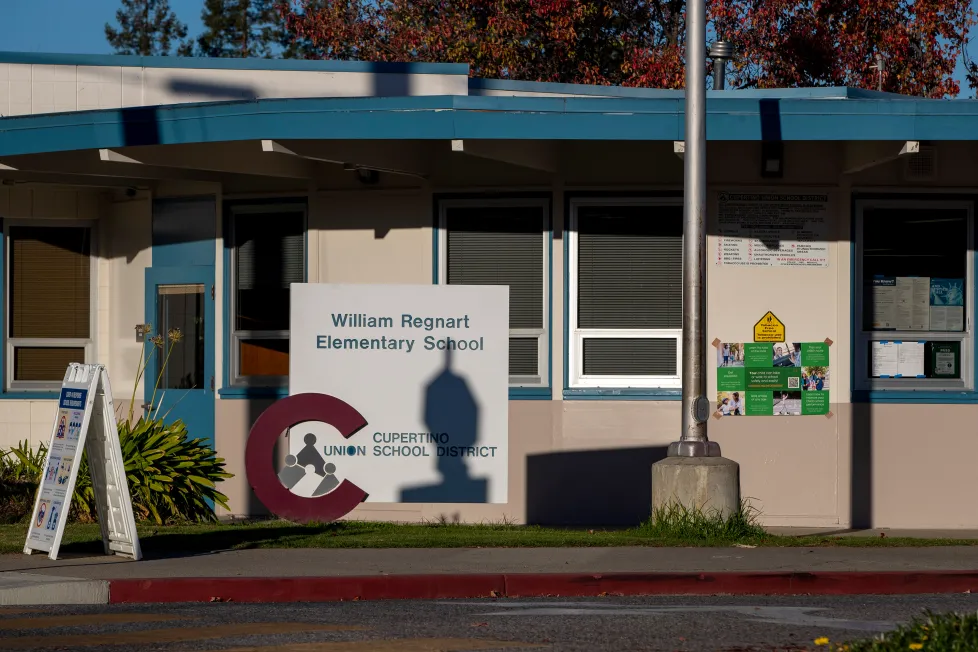
The Cupertino Union School District ended Fiscal Year 2024-2025 with a deficit of over $26 million — and the deficit for 2025-2026 is projected to be greater than $11 million. A combination of declining enrollment and changes in funding has created the need for a new fiscal plan in the 2025-2026 school year.
Located in Santa Clara County, CUSD is home to 17 elementary schools and five middle schools. These notably include Hyde and Lawson, which are the primary middle schools that feed into Cupertino High School.
CUSD’s 2025-2026 fiscal stabilization plan targets four main areas: middle school elective offerings, transitional kindergarten, early employee retirement and the Cuperdoodle Preschool Program. At the CUSD Board Advance meeting on Oct. 30, 2025, board members discussed plans targeting these areas that would reduce spending by $8 million.
Currently, all middle school students have two electives in their schedule, including various arts, leadership and language programs. New plans proposed would reduce the number of electives available to students — for instance, restricting sixth graders to one elective per year. This would lead to a decrease of about 13-18 full-time employees, and could save around $1.5 to $2 million for the district.
In regards to transitional kindergarten, the district faces significant funding challenges with the mandatory Universal Transitional Kindergarten expansion. The Universal Preschool Act, passed in 2021, implements a universal preschool program that will be free and available to all 3 and 4-year-olds in California by 2025-2026. To support this change, the state would provide an increase in funds to California school districts that depend on state funding. However, CUSD is a basic aid district, meaning that 71% of funding comes from local property tax revenue, rather than from the state. This forces CUSD to absorb the new costs of the TK program from its existing local revenue, without receiving increased state funding.
The CUSD TK program currently costs an estimated $9,000 per student. In comparison, the fourth-grade program costs only about $4,137 per student. To reduce costs, the district may implement an enrollment cap or change to a half-day schedule — meaning that families would need to find alternate childcare for the other portion of the day. Reducing the size of the TK program could save about $2.5 to 3 million.
Another target of the fiscal stabilization plan is the Cuperdoodle Preschool Program. Depending on how changes to TK are implemented, Cuperdoodle may continue to expand, face no change or be closed by 2025-2026.
Finally, the fiscal stabilization plan aims to create early retirement incentives for 475 eligible employees. This allows the district to replace departed employees with lower-salaried ones. At the Nov. 20, 2025, Regular Board Meeting, CUSD associate superintendent Mike Ghelber discussed layoffs that will occur in the upcoming year. Due to a decrease in demand for particular kinds of service, certificated workers — workers that hold a specific credential to perform their job, such as teachers, administrators or counselors — may be laid off.
“For example, if we don’t have enough students signing up for a German language class, then we would reduce the sections offered and that position would see a layoff,” said Ghelber. “So, if it were five periods, and you only had enough students for three periods, we would move to reduce particular kinds of service — being those two periods that don’t have enough kids in them.”
By March 15, 2026, the board will adopt a resolution regarding proposed layoffs, and final decisions on layoffs will be determined by May 15, 2026. These layoffs will be decided based on employee seniority.
Although these layoffs may raise questions about how CUSD students and employees will be impacted, the district is dedicated to protecting its employees and maintaining the best outcomes for its students. If an employee position opens, CUSD may rehire workers who had previously been laid off, allowing them to return to their former positions.
“We don’t go hire somebody from outside in the community before we bring back people that were our own,” Ghelber said. “So when they come back, based on the protections, they don’t lose anything. They come back as a full-time teacher with all the benefits and everything.”