
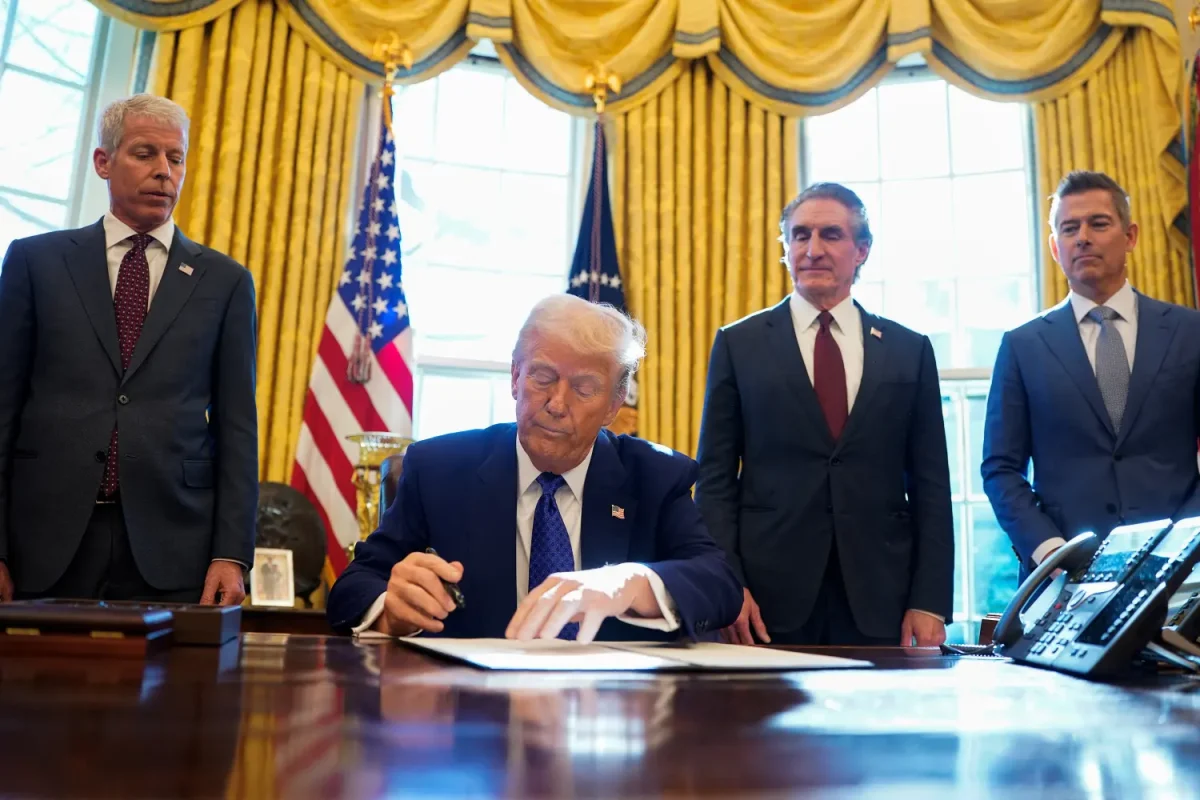
As high school students strive to stand out in the competitive sea of college admissions, politics is reshaping the prestigious institutions many hope to attend. Since taking office in January 2025, Trump has increasingly pushed for eliminating Diversity, Equity and Inclusion programs, calling them “radical and wasteful.”
In early October 2025, the Trump administration decided to send a proposal inviting nine of the nation’s wealthiest universities to sign a document titled “The Compact for Academic Excellence in Higher Education.” While this compact aims at promoting academic rigor and merit-based standards, many criticize it as the Trump administration’s latest move in a political effort to dismantle DEI programs on college campuses.
Among its requirements, the compact discourages race and gender based admission practices. However, it also outlines restrictions on prohibiting transgender students from using campus facilities, such as restrooms and housing accommodations aligned with their gender identity — a person’s sense of being male, female, non-binary or another gender — and from participating in sports based on their identity.
According to administration officials, universities that sign this compact would receive “multiple positive benefits” involving priority access to federal funding, stating “substantial and meaningful federal grants.”
The compact has since been extended to all higher education institutions in the country. Seven of the original nine targeted universities — including Dartmouth College, Brown University, Massachusetts Institute of Technology, University of Pennsylvania, University of Virginia, University of Arizona and University of Southern California — have all rejected this proposal citing concerns surrounding academic freedom and inclusivity on campus. In a letter to U.S. education secretary Linda McMahon, Dartmouth College stated, “Our universities have a responsibility to set our own academic and institutional policies, guided by our mission and values.” The letter further said that they do not stand by the intervention of federal power in higher education.
Of the two remaining schools, Vanderbilt University and University of Texas-Austin, neither school has publicly agreed to sign the compact nor reject it. Meanwhile, one institution, The New College of Florida, a small liberal arts college, has eagerly come forward as the first school to accept the terms of the compact. The school expressed its interest, stating, “We would be honored to sign the Trump administration’s compact.” Contrary to other universities, New College indicated that the terms of the compact already align with many of their values.
Furthermore, this has not been the first time the administration has been accused of overstepping federal authority in regards to higher education. Trump has historically used federal funding as leverage to pressure universities into adopting policies that align closely with his political agenda.
Previous actions against Harvard University exemplify this broader pattern of exerting federal control over universities. According to the American Broadcasting Company News, in April 2025, Trump froze $2.2 billion in research grants to Harvard and threatened to pull an additional $1 billion for medical research. The university quickly responded, arguing that the move was unconstitutional. The lawsuit was ultimately ruled in Harvard’s favor, as the court saw it as an overreach of executive power.
The compact also poses some legal problems. Critics argue that it directly violates the First Amendment. This amendment protects individuals’ fundamental rights to freedom of speech, religion and government petition. The compact is accused of using federal funding to sway institutions into accepting specific ideological preferences.
Moreover, the compact could impact the college admission landscape if adopted. Admissions offices may place heavier emphasis on standardized testing and other traditional academic metrics instead of extracurriculars. Additionally, DEI scholarships and programs could lose funding, inevitably affecting students who rely on them for academic support.