
Politics used to belong to politicians alone, but now, it lives on Instagram stories, TikToks and even talk shows, where celebrities hold the microphone and viewers are the ones listening.
As society advances, politics changes alongside it. Every day, a new issue is raised, a new initiative begins and another flood of discussion opens. Now more than ever, people of all perspectives come together to debate on real-world topics. In particular, celebrities and influencers using their platforms to talk about politics have sparked recent conversation. From giving a thank-you speech at the Grammys to sitting in front of the camera to film a video, celebrities use their platform in a variety of ways to speak out. In spite of that, most celebrities who decide to speak their mind face public backlash when met with viewers who hold differing perspectives. Whether or not celebrities should be publicly involved with politics remains an ongoing debate.
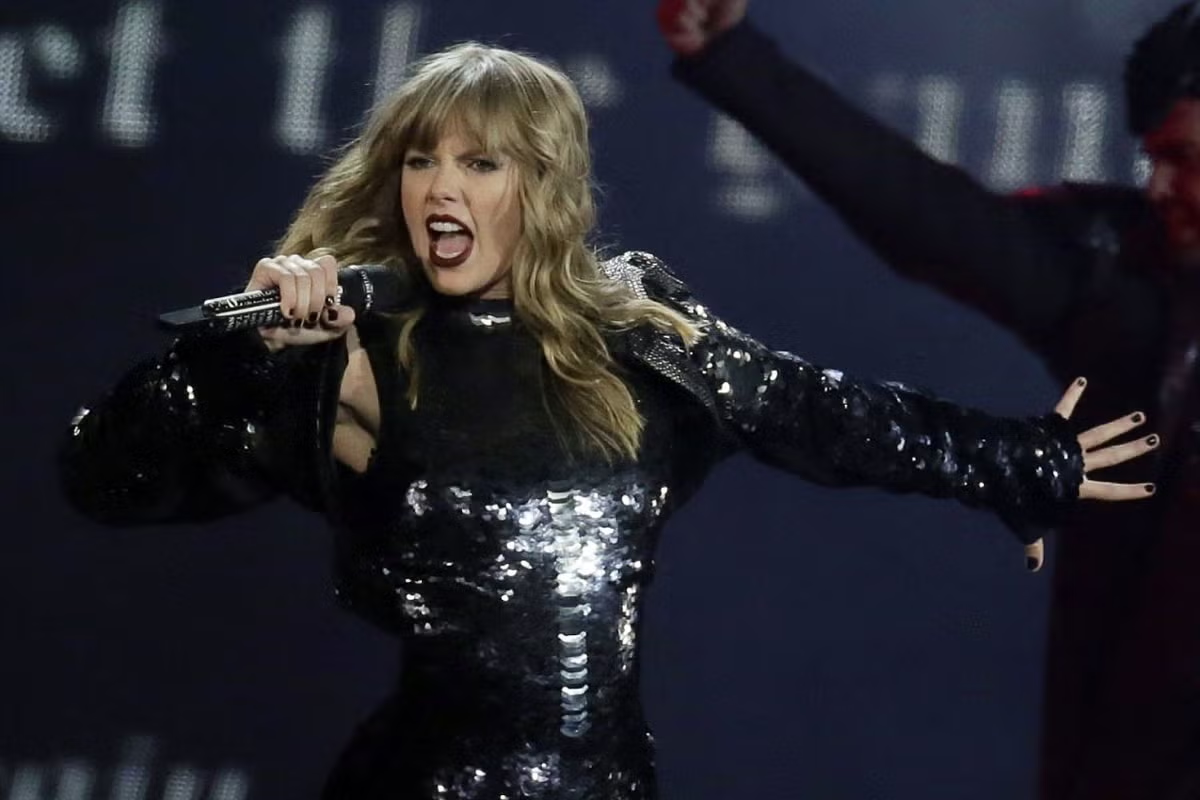
Celebrities such as Taylor Swift, Cardi B and LeBron James are some of many who are passionate about sharing their views on current world issues. However, they are often the targets of backlash and hateful comments. Regardless of their intentions, such actions may be perceived as skewing votes, especially with celebrities who have large fan bases.
Said writer Emily Chang in an article for the American Broadcasting Company, “Back in 2018, Taylor Swift encouraged her fans to register to vote by posting a simple Instagram story, resulting in 250,000 new Vote.org registrants in 72 hours. In a similar fashion, Kylie Jenner utilized Instagram to urge her followers to vote in 2020, and the site to which she linked reported a 1,500% increase in traffic compared to the day before — and an 80% increase in total users registering to vote.”
Some might argue that this result can be seen in both a positive and a negative light. Many understand that celebrities’ votes are beneficial and can contribute to a more just election. Yet, many still believe that a superfan would likely cast their vote in the same way as an idol. Although it is not entirely wrong to support a superstar, many celebrities voice their opinions without completely understanding an issue.
Instead of aimlessly speaking out on politics, it is crucial that celebrities educate themselves on the topics they are presenting to their viewers. Without learning about further details and specificities of the issue, they are not able to effectively speak out about their own opinions, much less affect the opinions of their fanbase. Education plays a major role in the sharing of opinions on sensitive topics through global platforms that anyone can access, such as Instagram or TikTok. Viewers come from a variety of backgrounds and mindsets, so without proper knowledge, the words of the celebrities may be taken out of context.
Said Chang, “The evidence is clear that, using their powerful platforms, these influential figures can encourage and empower more everyday Americans to use their voices and exercise their civic rights.”
Audiences can choose to listen, question and think critically, instead of immediately adopting the thoughts of a celebrity. In addition to celebrities’ education, individual research and personal biases must be considered.
Today, politics is part of our daily lives: social feeds, celebrity interviews and even funny viral moments. Some see this as a positive shift, allowing important causes to garner more visibility from the public and inspiring younger generations to get involved. Others worry it blurs the line between genuine informed activism and performative influence.
It is crucial to make smart decisions on an individual basis, instead of leaving it up to an individual’s favorite celebrity. Politics might be everywhere now — on our screens and in dinner table conversations — but how we engage with it is still up to us.