


If you had earned $5,000 every single day since Christopher Columbus set sail in 1492, you still would not have accumulated $1 billion today. This staggering reality uncovers a fundamental truth: extreme wealth is rarely the result of hard work alone but rather a result of systems that tend to prioritize corporate profit over the common good. While we often idolize billionaires as self-made heroes, the existence of such a class is fundamentally unethical because it relies on the depletion of public resources and the suppression of working-class wages. In order to understand the true cost of the ultra-wealthy, we must look past individual grit and start looking at the moral implications of an economy that is designed to keep resources for a select group of people.
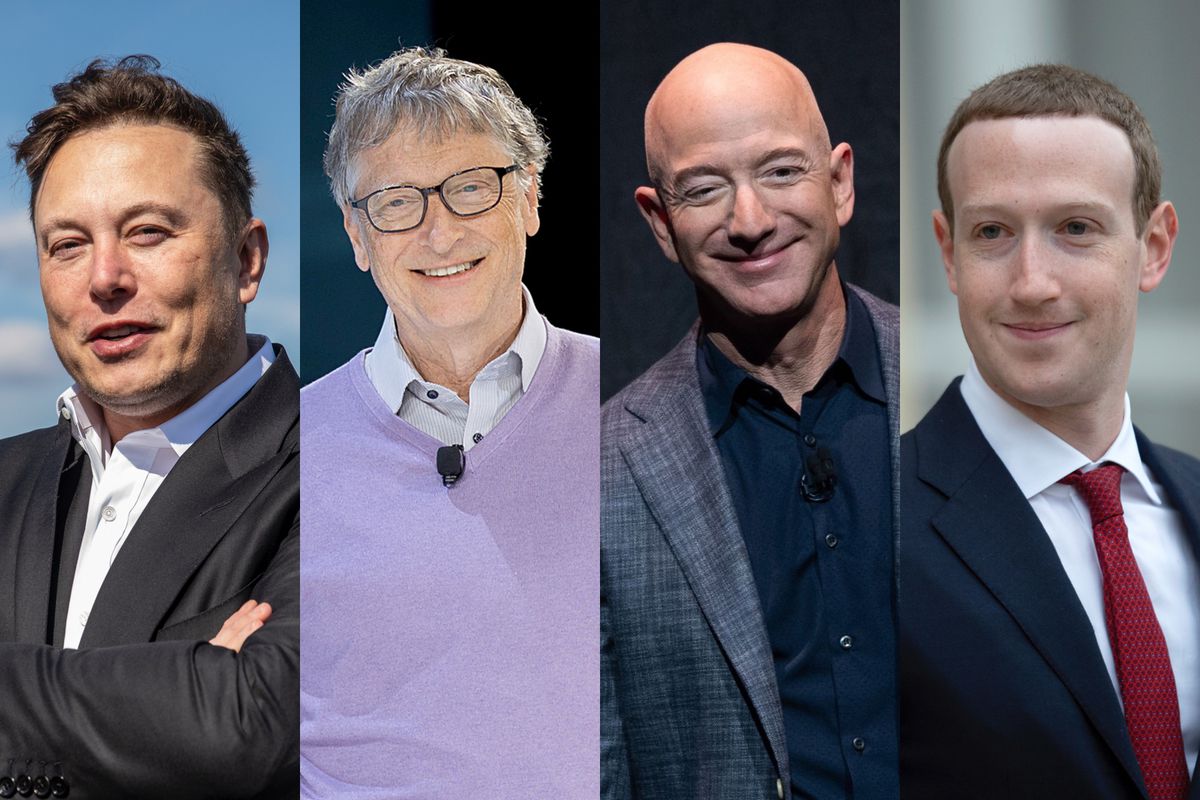
In the past decade, global wealth inequality has increased. The richest on Earth have accumulated large amounts of money, while wages for working-class families remain largely unchanged. This contrast is particularly visible in Silicon Valley. Tech founders, such as Jeff Bezos and Elon Musk, are often portrayed as geniuses who built their empires from the ground up. However, much of the system is built on government subsidies, tax loopholes, suppressed labor costs and systems designed to keep resources at the very top. Put together, it is a mechanism of corporate welfare, where public funds and depressed wages directly increase the profits of some, favoring those higher up at the taxpayer’s expense.
This dynamic further emphasizes that a net worth of $1 billion is rarely a reflection of personal innovation alone, but is often a rank that is unachievable without having to take value from others.
Here in the Cupertino community, one of the wealthiest regions in the world, people are surrounded by trillion-dollar corporations and homes worth at least a few million dollars. Yet, some still struggle with affordability, families face rising rent and food costs and many are faced with the societal and economic pressure being generated just miles away. We live in a society where extreme wealth is treated as the ultimate success, where many admire the ultra-rich and aspire to become one of them in the future. However, that perspective forces us to embrace the ultra-rich rather than question the systems that took them to that level.
Despite these societal pressures, some argue that billionaires are not always unethical because wealth itself does not define ethicality — they suggest that ethical judgment should be focused on how wealth is generated and used. For example, billionaires who comply with tax obligations and support research initiatives may contribute to economic growth and their community.
However, this ideology ignores the fact that money tends to buy power. Noted economist Jose Stiglitz, “Extreme wealth is not just a command over resources. It’s a command over people.”
Even when billionaires do invest in innovation or pay fair wages, they are exercising a level of power that tends to bypass democratic checks and balances through massive campaign contributions, lobbying for deregulation and ownership of influential media platforms.
However, relying on the “good behavior” of billionaires overlooks a critical flaw: benevolence is not a substitute for regulation. When we start to rely on voluntary philanthropy, we allow the ultra-wealthy to decide which societal problems are looked at and get solved and which ones do not. As a result, even the “responsible” use of wealth perpetuates a system where influence stays in the hands of only a very few, rather than a democracy with the public.
To conclude, it is important that we stop measuring the ethics of the ultra-wealthy by their individual acts of philanthropy and charity and start measuring them by the true hidden cost of their wealth accumulation. Ultimately, a fair and just society must question why our economy concentrates so much power in the hands of so few people. It is important to advocate for a future where success is defined, not by one’s net worth but by the common good.