
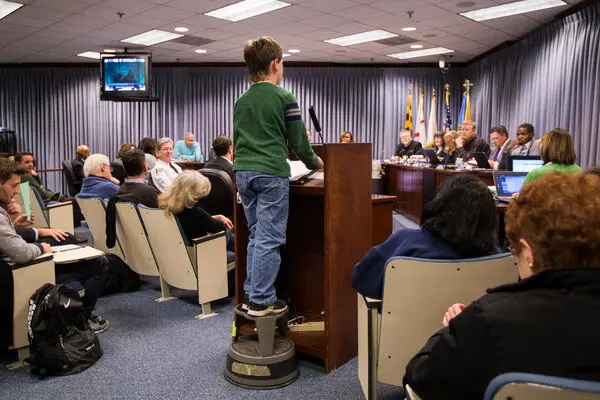
Local elections are votes that decide smaller-scale leadership and policies, such as mayoral races or city council seats. Public schools are also shaped by school board elections, which directly determine district priorities like budgeting, campus safety and student services. As voting outcomes branch outward and into everyday life, students who are active community members feel the impacts most pressingly, yet still have no formal electoral voice.
Unlike national elections shaped by broad-scale agendas, local elections focus on the immediate welfare of a community’s individual residents. As not only future citizens but present residents and contributors, teens should be recognized as some of these elections’ most directly affected stakeholders.
According to the United States Bureau of Labor Statistics, 5.4 million teens ages 16–19 were employed as of April 2025. A University of Nevada, Reno Extension fact sheet on youth volunteerism reports that teens contribute about 2.4 billion volunteer hours each year, estimated to be worth $34.3 billion to the U.S. economy. When local leaders decide school budgets, transportation access and student support systems, they are allocating resources that teens need to stay involved and help run a beneficial community.
Not only do high schoolers make up a sizable portion of the labor force — especially upon zooming in on individual cities and counties — but they also bring a perspective adults often miss. As minors, they are expected to live with decisions they did not help choose, and unlike most adults, teens cannot opt out when local policies fail. They are required to function with the status quo every day.
That status quo, thus, should reflect a way of life that is accessible, safe and supportive for all community members, not just those with the most independence and resources. Students can contribute crucial perspectives on whether local systems actually work for the average resident — the person who cannot drive everywhere, cannot pay for private alternatives and relies on public infrastructure to get through the day. Teens so often happen to be that resident, after all.
Opponents of lowering the local voting age frequently argue that students can simply endure policies they disagree with until they turn 18. Another concern is that expanding voting access would also empower students who may be immature or uninterested, potentially weakening informed local decision-making. But allowing students to vote locally is exactly how cities can build more informed voters over time. Early civic engagement becomes a habit, making participation feel expected and connected to daily life. Additionally, the fear that giving informed students the vote also extends it to less engaged peers is not unique to teens. A significant number of adults vote with limited information or skip local elections entirely. Instead of leveraging that as a reason to exclude students, communities should treat youth voting as a beneficial and propelling opportunity.